What Is the Schwa?
English has a unique rhythm. It’s called stress-timed rhythm, and it means we don’t pronounce all syllables equally. Instead, we clearly pronounce the stressed syllables and underpronounce the unstressed ones.
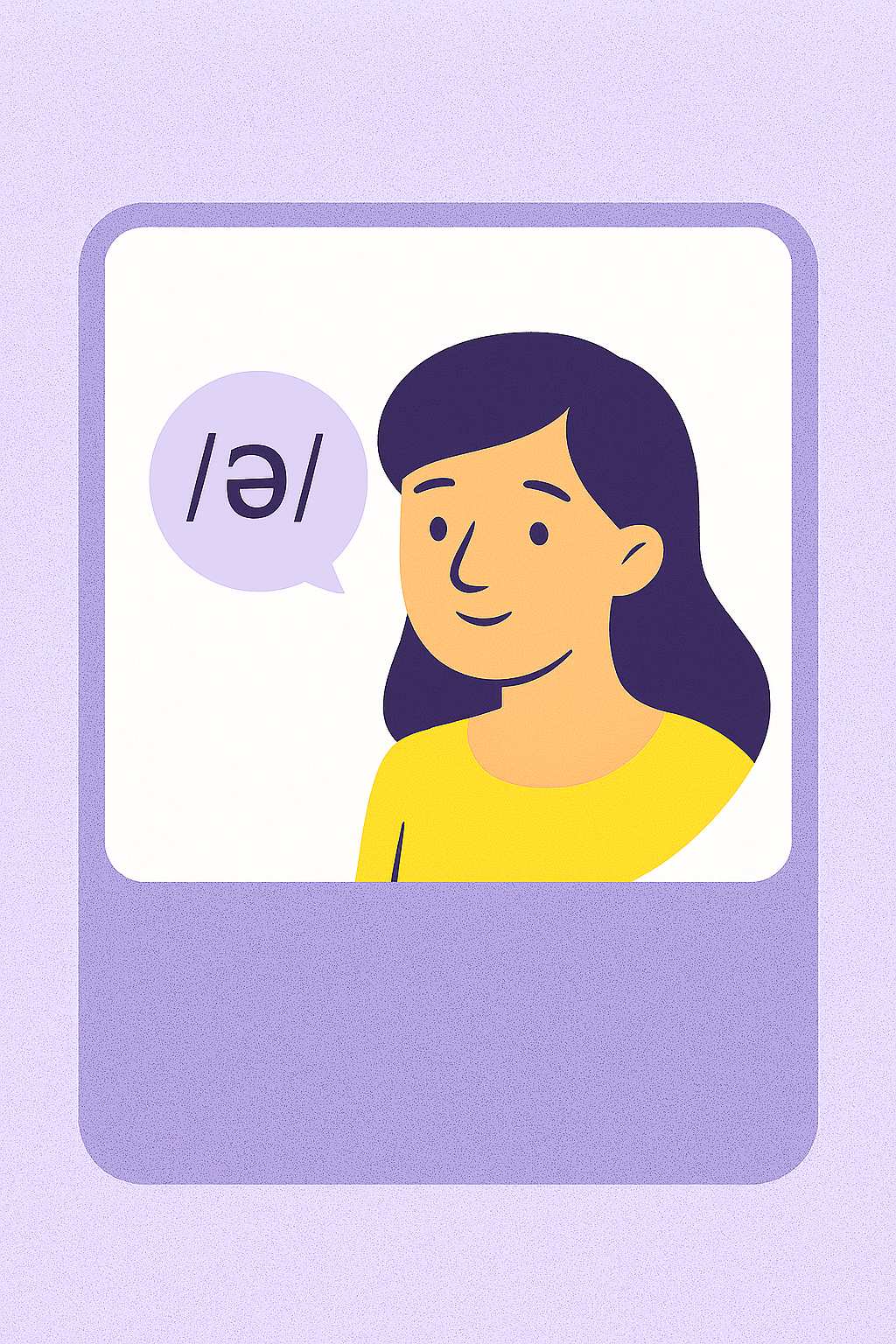
That’s where the schwa comes in. It’s the most common vowel sound in American English—represented by /ə/—and it shows up in those weak, unstressed syllables. It sounds like a lazy, relaxed “uh”.
Native speakers use it constantly to maintain smooth rhythm and natural pacing. Instead of stressing every syllable, they replace many unstressed vowels with a schwa. Here are some common examples:
- banana → /bəˈnænə/
- support → /səˈpɔrt/
- about → /əˈbaʊt/
- celebrate → /ˈsɛləˌbreɪt/
What Is the Lazy Schwa?
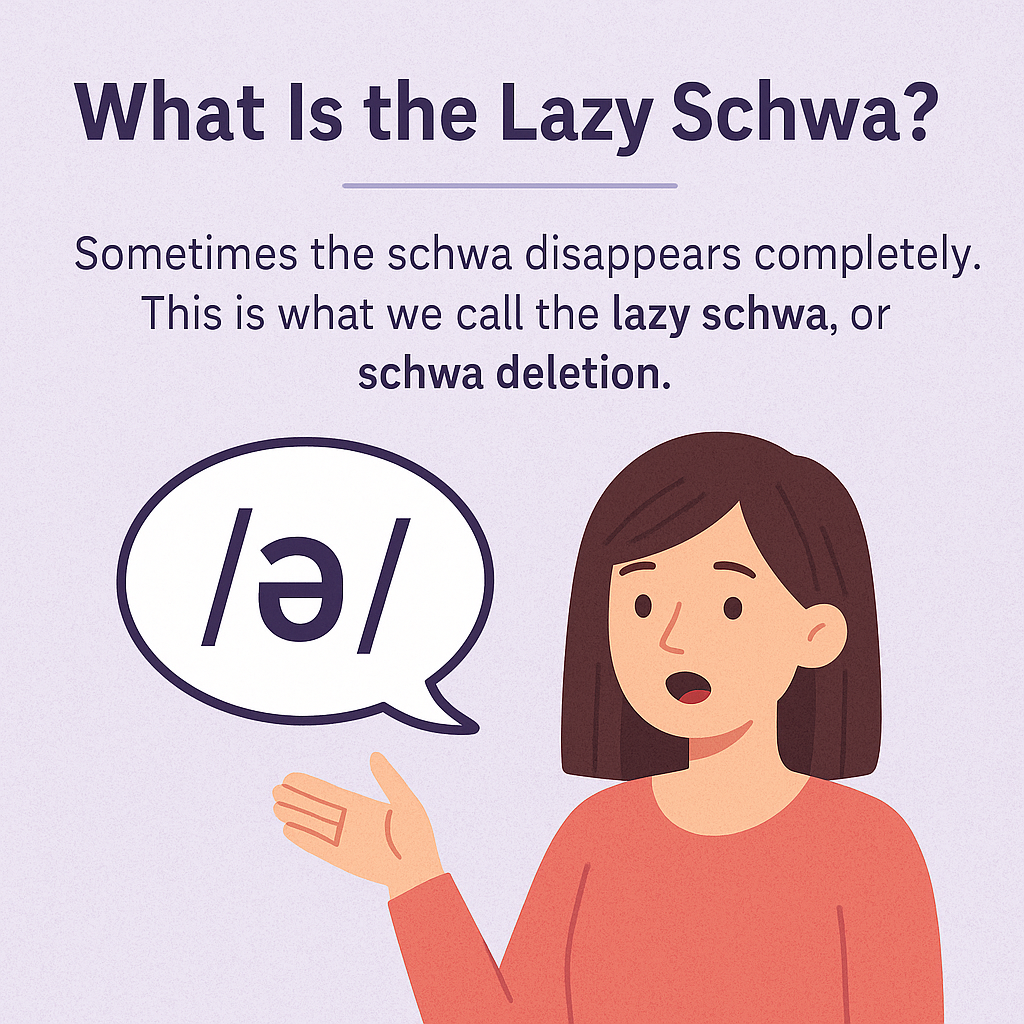
Sometimes the schwa doesn’t just weaken the syllable—it disappears completely. This is what we call the lazy schwa, or schwa deletion. Instead of pronouncing a full unstressed syllable, native speakers often just skip it altogether.
You’ll hear this in words like:
- chocolate → choc‑lit
- camera → cam‑ra
- family → fam‑ly
- favorite → fave‑rit
It’s a natural result of stress-timed rhythm. The brain skips what isn’t necessary for understanding. But most learners still try to pronounce every syllable—and that’s what makes speech sound slow and unnatural.
Support & Stay Connected
If these lessons have helped you, you can support my work:

Follow me here for more tips:




New tips, behind-the-scenes, and updates every week